

Getting Started With Beans
Cooking with dried beans doesn't have to be intimidating. Here's my method.

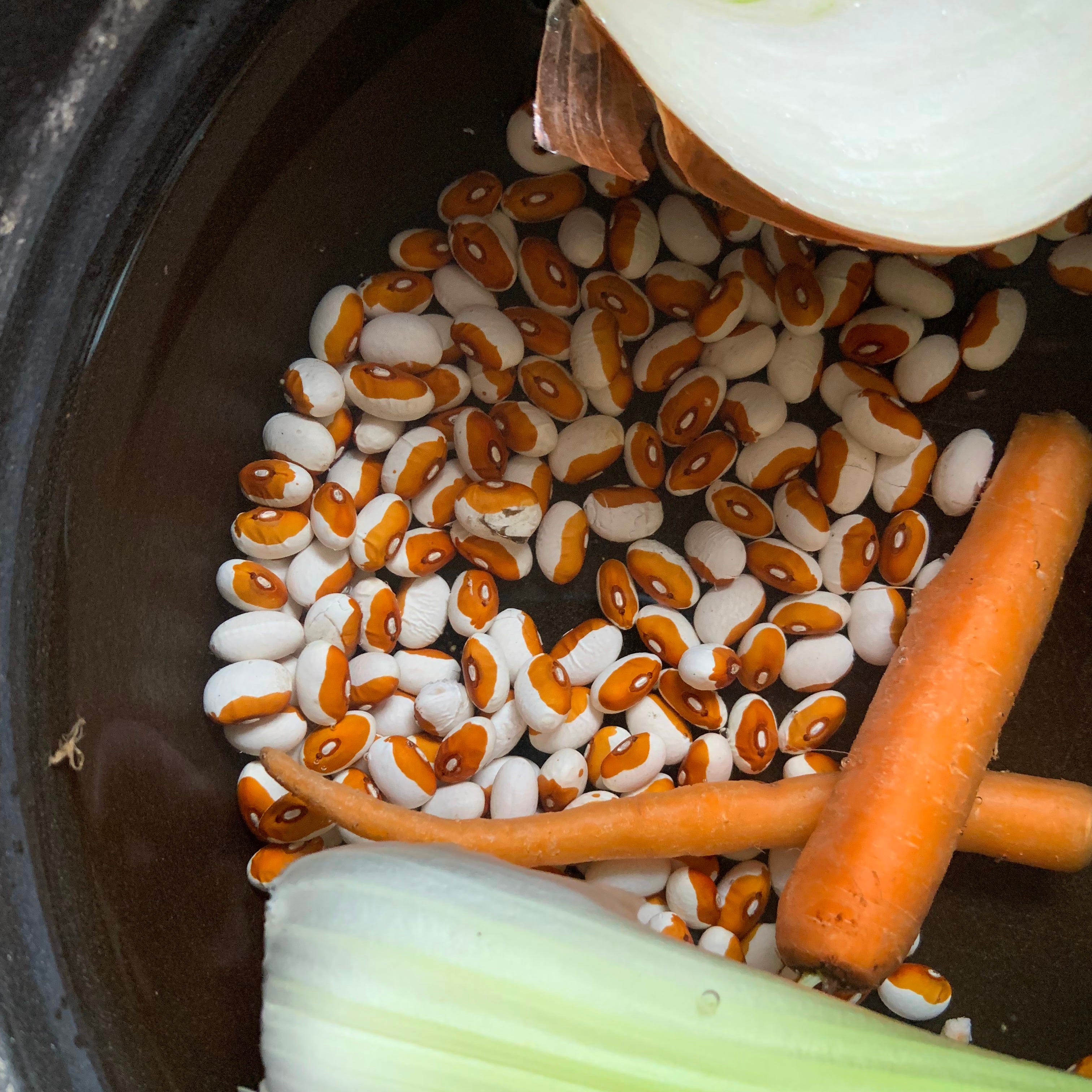
If you've written off cooking with dried beans because you don't want to fuss with all the time and techniques to make them, you're not alone. Canned beans are a fine option when you need a classic bean for a quick recipe. But to make your dishes more flavorful, give dried beans a chance — they aren't as intimidating as you think.
After years of using fresh over canned, here are some tips I've gathered to help you cook dried beans more easily.
Why use dried beans in the first place?
While you can find canned black, kidney, cannellini and a handful of other beans at the grocery store, you'll always be limited to those options if you exclusively cook with canned beans.
Using dried beans, specifically from small producers, gives you more to work with.
Variety. Dried beans are available in more sizes, shapes, textures and flavors that can bring something special to your dishes. Use big limas for dramatic brothy beans with a velvety texture. Chocolatey rio zape beans produce a lux refried bean that requires little more than basic aromatics. In the same way that regional blue cheeses or specialty tinned fish can do more than the most basic choice on the shelf, heirloom and specialty beans can really transform a dish at its foundation.
Freshness. Speciality bean companies are selling more closely to harvest, delivering beans with better flavor — similar to market vs. grocery store produce. An added bonus: Fresher beans don't require soaking and cook more quickly.
Where to get high quality beans
You can buy fresh beans online, at major grocery stores and at specialty grocers. Look for these brands:
How I like to cook dried beans
Soaking, salting, simmering, stirring. There are many variables to consider when cooking beans, but here's what I have found to be most helpful in achieving flavorful, well-cooked beans.
Measuring out beans for a recipe
A pound of dried beans roughly measures out to three cans of beans. When cooked, that's about 1 1/2 - 1 3/4 cup of beans for one can. So if I see a recipe that calls for a can of beans, I'll measure out 5.3 ounces of dried beans, or 1/3 pound.
Soaking beans
If you're using fresh beans — you can usually find the harvest date on the bag — don't feel like you need to soak them. They'll usually cook within an hour or two, and soaking won't speed that process up very much. If you do soak smaller beans like flageolet, check on them sooner while cooking so they don't end up broken and overcooked.
I do like to soak beans for eight hours when:
I'm using dried beans that are a little older.
I'm cooking really big beans like royal coronas. I find that an overnight soak helps them cook a bit faster.
I know I'll be in a pinch (prepping for a party, cooking ahead of an event) and want to speed up the cooking process as much as possible.
Aromatics for beans
I like to add whatever I have on hand to give my beans a little more depth up front. For a whole pound of dried beans, I'll add all or some combination of these aromatics:
Bay leaf
Onion, halved with skins on
Carrot, halved
Stalk of celery, halved
2 cloves garlic, peeled
Thyme sprigs
Parsley sprigs
1 teaspoon black peppercorns
Drizzle of olive oil
Showering of salt
Parmesan rind (if my dish will be cheesy or creamy)
Dried bean cooking method
After trying different techniques, I've found that slow cooking my beans in the oven gets me the most consistent results with less active cooking time. I use a Dutch oven for this method, but you can use any heavy-bottomed pot. You can also cook beans entirely on your stovetop or in a pressure cooker.
If you soak. I don't toss the soaking water. Just add the beans and the water into your pot and add enough additional water to cover the beans by a few inches.
Oven temp. Set to 275 F and adjust oven racks if needed to ensure the Dutch oven sits as close to the middle of the oven as possible. This temp keeps beans at a steady and gentle simmer, though you may need to adjust the temperature up or down based on your specific oven.
Boil. Add your aromatics and bring beans to a boil over high heat. In my experience, you don't need to boil them for any specific amount of time. Just reach a boil, turn the stovetop off, cover and transfer to the oven.
Cooking time. This varies depending on the size and freshness of the beans. For those similar in size to a classic black or white bean, two hours usually does the trick. Smaller beans can take as little as 45 minutes and larger beans up to three hours.
Stir. I stir my beans at least once halfway through the cooking time to help them cook more evenly. Beans stuck at the bottom of the pot can sometimes end up overcooked while beans closer to the top are still al dente. To make sure I don't forget this step, I usually set my first timer at 30-45 minutes.
Testing beans for doneness
I'm a big fan of the three-bean method, meaning that you stir the pot and scoop up three beans to try. If all three are tender, you're done cooking. If not, return them to the oven and repeat the test in 15-30 minutes. Keep testing until you pass! And don't fret if some of your beans split — they'll still look great in your dish.
How to store leftover beans
If you don't use all the beans you cooked, put them in a freezer Ziploc bag and add enough broth to cover them. Squeeze out as much air as possible before sealing the bag. Lie flat to freeze.
Start cooking your own beans!
Ease into the world of dried beans with a cheat sheet on how to build five easy beans dishes alongside spring and summer produce. Get the zine to access the guide and more ways the enjoy beans.
♥️ 🫘
🫘🫘🫘